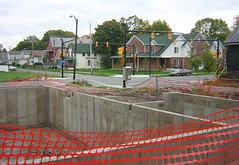
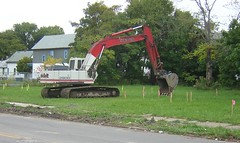
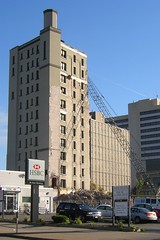
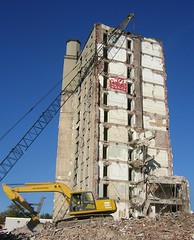
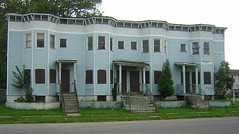
I've gathered the best pics and arranged them in two differnent slide shows.
- February 5, 2005 - about GRCO
- May 1, 2005 - Where did the people go?
- June 22, 2005 - CAO on Dodge Street


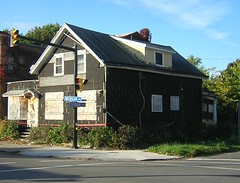
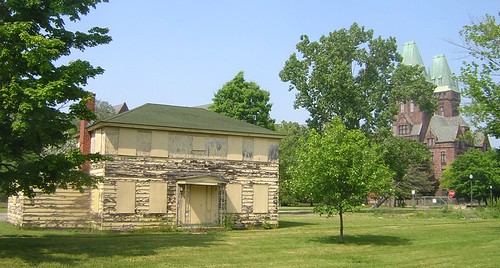
Again, here's the Bishop's residence at 79 Oakland Place.
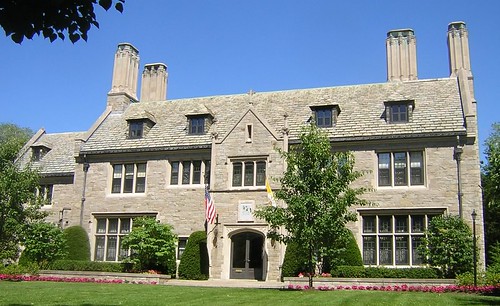
While Bishop Kmiec continues to reside at 79 Oakland Place, in the most expensive (highest assesment) residence in the City of Buffalo, it's helpful to remember what happens to former Catholic Church property when it's "flipped" to unsuspecting and irresponsible owners on Buffalo's east-side.
Artspace Archive • Annals of Neglect • BAVPA • Where is Perrysburg? • Broken Promises...
Writing the City • Woodlawn Row Houses • Tour dé Neglect - 2006

Related Posts: Get ready to Duke it Out and We've Been 'Duked', Really! Duke Realty (NYSE- DRE) shares closed up slightly on Friday at $34.90 Look at all the beautiful "suburban style" office parks Duke Realty has built.
Artspace Archive • Annals of Neglect • BAVPA • Where is Perrysburg? • Broken Promises...
Writing the City • Woodlawn Row Houses • Tour dé Neglect - 2006 • faq

A second reader responded with some additional personal observations about the decline and "detroitization" of Buffalo. He sent me two e-mails.
This is the first...containing a number of personal observations and reflections about the neighborhood where he was raised.
I am originally from the Old East Side. When I was a child it was an all German neighborhood, cohesive, beautifully kept -- a real joy. During the 1950s it turned into the terrible ghetto, the remains of which are still sitting in ruins today. The "downfall" started right where we lived -- between what is now the Masten neighborhood and Humboldt Park -- and spread like a fast-growing cancer. My grandmother and parents did not flee because they were racist. The story has never been properly told or documented. It's hard to get people not to misunderstand that describing the Jacobesque downfall of the East Side and Downtown -- the two were simultaneous -- is not somehow "racist," since African American "migrants" were used in the scheme and made the new ghetto-dwellers. It's just the most sad story.This is the second e-mail and contains a number of references to the work of Jane Jacobs.
When I was last in Buffalo after my mother died and walked the streets where I was a child, I literally almost wept. The lovely buildings on Dodge Street boarded up, with a "For Sale" sign by Scott Wizig; the Home of the Good Shepherd, two city blocks full of wonderful Gothic buildings between Best and North, Timon and Johnson, with the originally buff-colored walls painted gray (to cover the graffiti) and the remnants of barbed wire left from the days when it was the juvenile corrections facility still visible; the houses my great-grandfather built that served us for four generations razed; wonderful "walking-lifestyle" shopping streets like Genesee and Jefferson completely decimated and "vacant."People who don't have roots and first-hand knowledge of this story get some "stilted" viewpoint that comes from academic imaginations -- they just rave on about "racism" having killed Buffalo. That is so superficial and insensitive! I hope before too many years pass to be able to be resident there again and do research on exactly what happened.
The piece is very interesting. The fact that your intro starts by speaking of your pondering all the demolitions in the Masten area lately is also. I will assume whoever reads what I say has read what you highlighted.
Jane Jacobs says in so many ways what people never seem to "get" -- i.e. that there has to be an indigenous economic engine for there to be a vital city. You can't put "trinkets" copied from other cities in the midst of an empty or "poor" core and expect the accoutrements themselves to draw and keep people. So ideas of convention centers, casinos, and other "big item" "deals" to "bring people into Buffalo" are nonsense. First there has to be something "organic," something that represents vital activity that is in and from and about Buffalo to "be there" before any of the "adornments" of cities will work.
The fact that Buffalo is "empty" to a great extent, particularly its East Side, is that the indigenous ethnic groups who inhabited it and "fed" the adjacent downtown were broken up and moved to the suburbs in the '50s and '60s. Here's where some of the "slumlording" and other city-smashing ideas Jacobs writes about elsewhere need to be understood -- i.e. if one wants to understand how Buffalo became "so empty." A ghetto of alienated, welfare-dependent victims of nefarious schemes could not replace economically or in any viable way the strong middle classes of the indigenous ethnic groups (which I will continue to maintain, as I know so from my own personal observation and upbringing in the midst of the fiasco, was not an "organic" development). Then, too, in the interview quoted with Bromley and Tielman, Jacobs makes the point that Buffalo did see itself as a "branch plant" town, and doing so was a very hurtful thing to do. Bringing "things" in to provide a non-indigenous economy, if it is all a city is depending on, is always a mistake. The "enterprises" use the city they were "brought to" to their own profit, then skip town when labor is cheaper elsewhere or other advantages that are selfish on their part motivate them.
The main point Jacobs is making is that you have to have "indigenous" vitality and economic and other activity that provides an "engine" (my term) for a city.
Given that Buffalo has lost so much population and suffered so many schemes that displaced people to the suburbs (Jacobs says it herself -- people who "flee" to suburbs and claim to like them have had negative experiences as they were caught in the midst of urban problems -- Yes -- so true!), it needs a "huge" new "engine."
So what large new engine could there be that is comprised of Buffalo's people, important processes, and major affairs and that serves Buffalo and could serve it uniquely even more?
It has been proposed on this list and in many circles that Buffalo's large, locally indigenous and productive "engine" is unfortunately stuck out in Amherst -- viz. "SUNY Buffalo." When the University OF Buffalo was "talking about" joining the "state system," people had just the fear and reservation that came true -- viz. that the City of Buffalo would not be the focus of the university any more, that Buffalo would "lose control" of it. Behind closed doors and in an amazing display of secrecy, SUNY (at first called SUNYAB -- yuck!) was put out, in gray, stolid pieces on the wind-swept plains of Amherst.
The most sensible way for Buffalo to regenerate is to bring a major -- probably the only left -- part of its "heart" back into the City and spread it out amidst Downtown and the East Side, the areas most needing the economic engine. Can't you visualize the restored buildings, the dense housing, much of it also restored, the services, the support businesses, the trolley cars and light rail, all the activities? This would make Buffalo an interesting place for people to come to. A casino to drive to and away from, a sports arena, or a convention center -- none of these do anything like the university. Universities are famous for being great supporters of local small businesses -- they breed them in exponential ways. The creative talent, the education of people, the service to community -- all are inherent in an urban university. Right now SUNY - Buffalo is absolutely a misnomer.
The largest project being done that is similar to this idea is occurring right now in Phoenix, AZ, of all places, where the President of the State University and the Mayors of Phoenix, Tempe, and most "valley" cities are all in agreement that the entire community, especially the previously quite uninteresting and somewhat "down" downtown in a metro area of some 6 million people, needed the economic, cultural, and social vitalilty that the huge university inherently promotes. The entire idea has seen no "split" between the state university and the city. Ideas like this one have been tried and succeeded to fruition in many areas of the U.S.A.
Why can Buffalo not "get to" this ideal? It is so insane to imagine that convention centers or pedestrian malls can make a city when there is no social-cultural-economic core to the city!!!
Waiting only for small shops to constitute an entire gutted city is also naive. These small businesses thrive around a "heavier," more central indigenous core.
Artspace Archive • Annals of Neglect • BAVPA • Where is Perrysburg? • Broken Promises...
Writing the City • Woodlawn Row Houses • Tour dé Neglect - 2006 • faq

click to enlarge

click to enlarge


click to enlarge


click to enlarge

click to enlarge
And don't forget about Artspace coming to this side of Main Street, soon. Already, I heard that houses along Coe Place are beginning to experience the first signs of "gentrification" and did someone say....shhhh...rising property values. Can't be. It's Buffalo...and the East Side. Finally!
Artspace Archive • Annals of Neglect • BAVPA • Where is Perrysburg? • Broken Promises...
Writing the City • Woodlawn Row Houses • Tour dé Neglect - 2006 • faq
The "Esenwein and Johnson in Buffalo" exhibit at the Buffalo and Erie County Historical Society highlights two gifted architects who established and maintained a Buffalo firm for more than 30 years. The exhibit features photographs of some of their best known works: the Electric Building, Lafayette High School and the ill-fated Temple of Music, scene of President William McKinley's assassination. One of the most interesting buildings was designed by August Esenwein in 1893: the German-American Brewery and Hall, located at 23 High St. This is the same building, now altered, undergoing demolition at Main and High streets.Contrary to the article in the Oct. 11 News, this was not a "derelict" building. Structures of similar condition are now being renovated into luxury lofts in Toronto, Chicago and, yes, Buffalo. For the brewery, this was not meant to be, another piece of Buffalo's heritage struck by the wrecking ball, soon to be known only in historic picture. We are losing our history, and with it, our civic soul.
Stop by Main and High, raise a glass and imagine the German bands playing, the dancing and the rollicking times this building saw; a bitter irony during Oktoberfest to see it go.
Gregory Lodinsky
10/28/05 1130 pm
Seems like the near East Side is undergoing a radical transformation...From the Buffalo News on October 11th we learn...
The Buffalo Urban Renewal Agency last month approved a $300,000 low-interest loan to defray demolition costs. Read the full story....Here's a rendering of what's proposed for the site.

Under a joint venture between AIDS Community Services and Clover Management, Evergreen Center, a $10 million, five-story medical services and research center, will take root at 23 High St.
The new 50,000-square-foot complex will allow the organization to continue providing HIV/AIDS prevention and care, while adding research to the mix, said Christopher Voltz, director of marketing and special projects for AIDS Community Services.
Artspace Archive • Annals of Neglect • BAVPA • Where is Perrysburg? • Broken Promises...
Writing the City • Woodlawn Row Houses • Tour dé Neglect - 2006 • faq
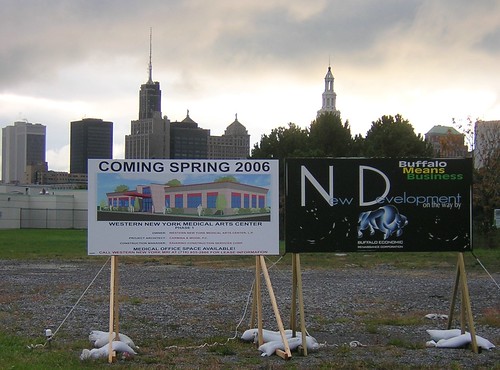


Btw...Did someone say they wanted to move into a loft? Think of the possibilites...imagine the roof top parties...
10/28/05 630pm
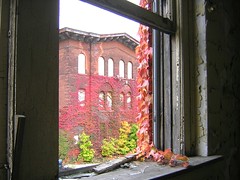
you won't believe this spot! Yeah...I know the City owns it,
yet the view from the roof is totally amazing...right around
the corner from the former theatre district!
Artspace Archive • Annals of Neglect • BAVPA • Where is Perrysburg? • Broken Promises...
Writing the City • Woodlawn Row Houses • Tour dé Neglect - 2006 • faq
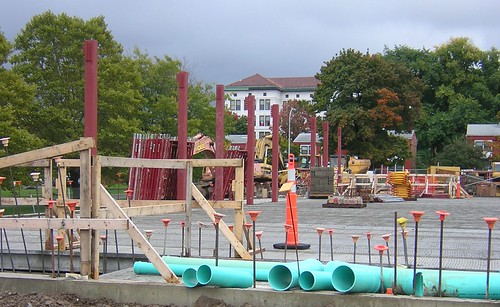
I tust someone will publicly ask Sam Hoyt where the phantom $100 million is that was promised, oh when...once upon a time.
And speaking of preservation...I remember some rather snarky e-mails from Sam about this...ouch!
10/22/05 11pm
Artspace Archive • Annals of Neglect • BAVPA • Where is Perrysburg? • Broken Promises...
Writing the City • Woodlawn Row Houses • Tour dé Neglect - 2006 • faq
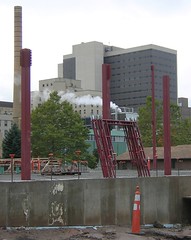
I've had a surge of activity linking to this page via the wikipedia "urban prairie" entry. Usually 10-12 hits/day from there. Today 250+ Someone, please let me know where you're coming from, who's linking...thanks.
Update...8/2/06
Check out Buffalo's Little House on the (Urban) Prairie
Update... 7/1/06
Chances are you arrived here from a search on Wikipedia for "urban prairie" Please take a moment to check out some of my recent posts. Especially a series of two recent posts about Buffalo's accelerating rate of population loss as recentley presented by two Wharton School professors at the University of Pennsylvannia. I've also linked to their study. Here and recently 7/Day - One every Three Hours!
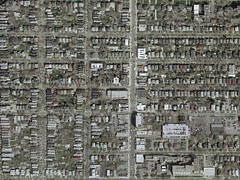
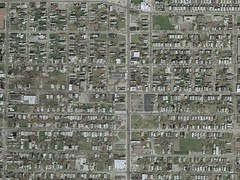
Compare these two images of the built environment along Utica, here in Buffalo. The shot on the left shows the intersection of Utica and Elmwood Avenue. The image on the right shows what life looks like a mile away at the intersection of Utica and Jefferson. No, all the green spots have nothing to do with what the good people at the Olmsted Parks Conservancy are doing to our city. Here in the 'hood this is called the 'urban prairie.' A more abstract way of imagining the ever increasingly larger 'urban prairie' is to think of missing houses and all the recent demolitions here in Masten as, you guessed it, our shrinking tax base.
Both images are, probably two years old. The problem...I mean the 'urban prairie' has gotten larger. But you know this. It's reflected in your tax bills...
Frequent readers of my blog will recognize these Utica pics from a recent post, in May, where I was maxing out on google crack. The use of the term 'urban prairie' designating forgotten and now mostly empty and vacant urban property, I think is sort of new. I remember first bumping into this category of understanding urban phenomena over here, at Detroit Yes, an extraordinary site documenting what happens when a city, like Buffalo, loses half its population. Detroit Yes, is so worth checking out...
Artspace Archive • Annals of Neglect • BAVPA • Where is Perrysburg? • Broken Promises...
Writing the City • Woodlawn Row Houses • Tour dé Neglect - 2006
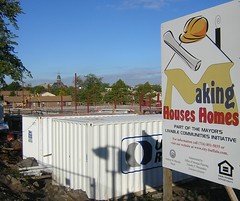
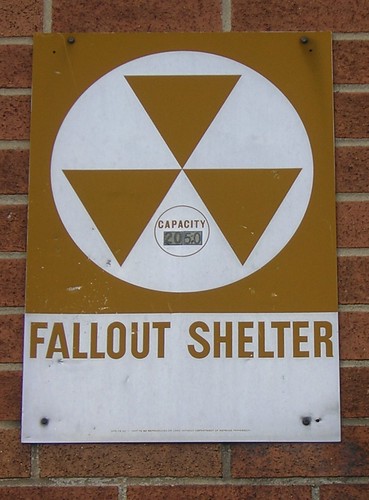
Are the programs still active? Do these signs mean anything now...that Home Land Security is looking out for us, today? Let me know...
Related Posts: Duck & Cover, the movie and Bert the Turtle.
Artspace Archive • Annals of Neglect • BAVPA • Where is Perrysburg? • Broken Promises...
Writing the City • Woodlawn Row Houses • Tour dé Neglect - 2006 • faq
Artspace Archive • Annals of Neglect • BAVPA • Where is Perrysburg? • Broken Promises...
Writing the City • Woodlawn Row Houses • Tour dé Neglect - 2006 • faq
Citizens Regional Transit Corporation seeks to educate the public, public officials, their authorities and agencies in the Buffalo-Niagara region about the benefits of a comprehensive transportation system including an expanded Metro Rail.
Our next monthly meeting is on Tuesday, October 18 at 7:30 PM. We meet monthly at University Presbyterian Church, 3330 Main Street, Buffalo NY 14214
Artspace Archive • Annals of Neglect • BAVPA • Where is Perrysburg? • Broken Promises...
Writing the City • Woodlawn Row Houses • Tour dé Neglect - 2006 • faq
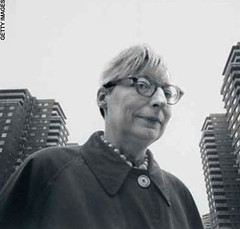
Continue reading the interview with Jane Jacobs, over here.HB: I thought I’d start by asking how you started writing about cities and what makes them work.
JJ: Well, I really explain all that in the Introduction to The Death and Life of Great American Cities. In brief, I was working for an architectural magazine, and I became dismayed at how unrealistic the plans that I was writing about were. I saw that they didn’t really make very magnetic or attractive city areas; people seemed to shun them instead of enjoying them. And then I was fortunate in having a good mentor who had been thinking about the same things, the head worker of a settlement in East Harlem. And he got me thinking along the lines of how city streets work.
HB: In ways that professional planners hadn’t really been considering?
JJ: No, they didn’t like the street....
10/18/05 11pm
- Just received this link about the life and work of Jane Jacobs from a frequent reader of this blog. See the comment below. Thanks Ken! The site includes Random Thoughts from Jane Jacobs. A must read if you are into urban planning and thinking issues.
Artspace Archive • Annals of Neglect • BAVPA • Where is Perrysburg? • Broken Promises...
Writing the City • Woodlawn Row Houses • Tour dé Neglect - 2006 • faq