3/30/2010

The Schoellkopf Power House - A New Lease

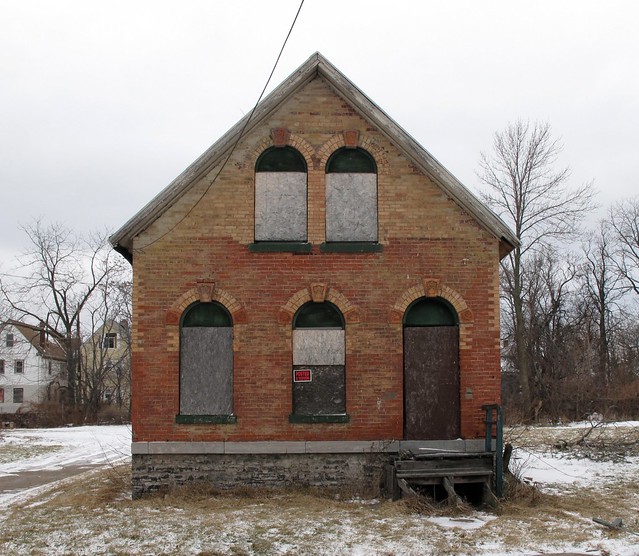
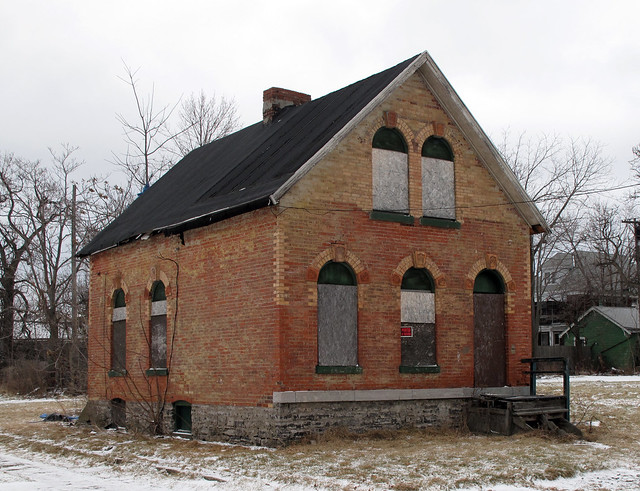
The Schoellkopf Power House, erected in 1917 by the John P. Cowper Company and put into operation in 1918, is now scheduled for conversion and will be used as a rail museum.
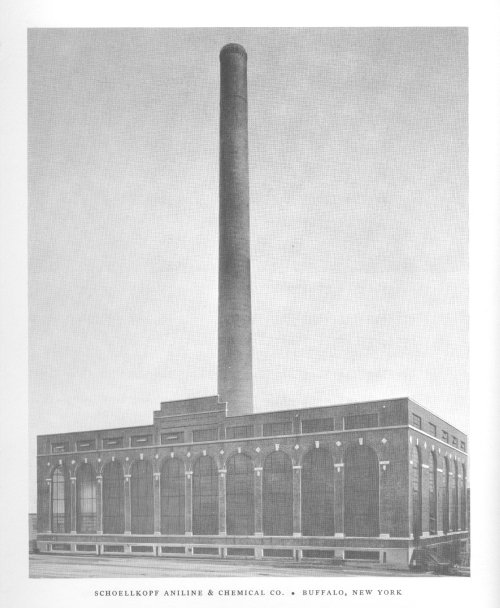
Schoellkopf Power House - Buffalo, NY

A recent view of the Schoellkopf Power House from the end of Prenatt Street looking east across the tracks.
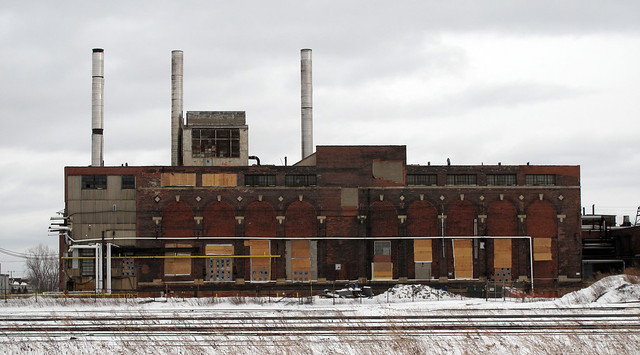
Schoellkopf Power House - Buffalo, NY

The industrial colossus located along the Buffalo River and home to Hanna Furnace, Republic Steel, the grain trade, National Aniline/Buffalo Color and countless other supporting service and manufacturing firms is now erie, quiet. The scape - looking in all directions - from the DL&W trestle and tracks (in the middle of the photograph) near the micro park at the end of Smith Street - is moving, especially in the context of what remains. Here's an aerial view, c. 1950.
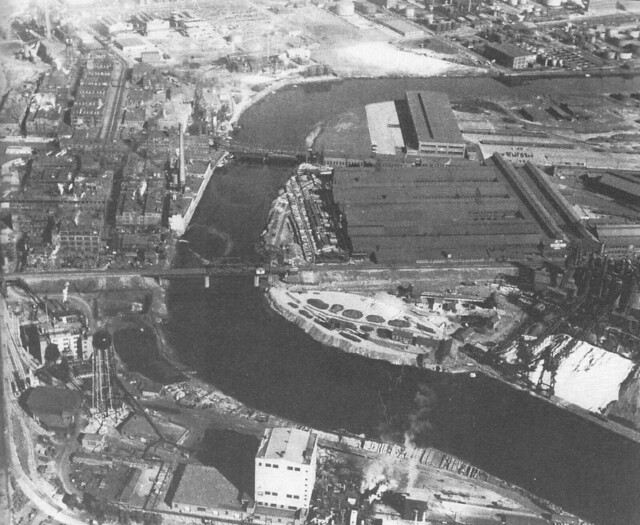


The Schoellkopf Power House is located in the upper left hand corner of the photograph. Two map images - here and here - depict a dense industrial landscape off Lee Street. 

Power houses around the world have been converted to other uses. The Tate Modern in London and The Power Plant in Toronto come to mind. The reuse of the Schoellkopf Power House comes on the successful conversion of other former industrial spaces in Buffalo - The Packard, designed by Albert Kahn and Artspace- along Main Street.

Robert Baptista has compiled an extensive history of this country's aniline dye industry. Here's the Buffalo section, tracing the origins from Jacob Schoellkopf in 1879 to Buffalo Color's plant closing in 2002. Buffalo News reporter Mark Sommer has the announcement and additional details in today's front page story about the new rail museum - here.
__________________________________________________________________________________

3/04/2010

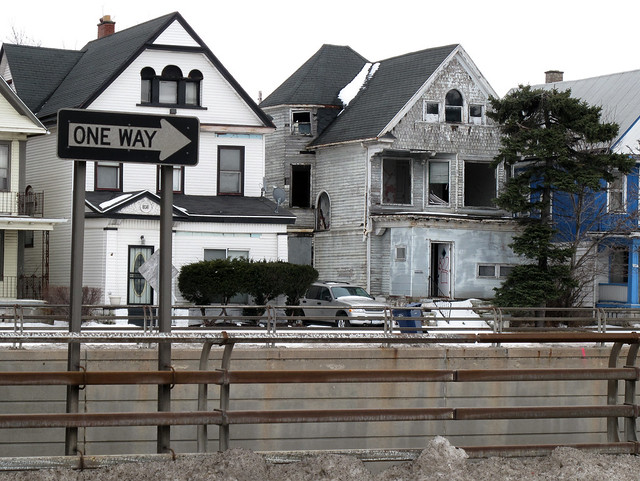
Bury this Big Mistake - Fixing the Kensington Part II

This week's Artvoice cover story - Bury this Big Mistake - is required reading for City residents, ex-pats and policy makers.

IMG_6683

From Geoff Kelly's cover story:
The $45 million Kensington Expressway tore up Frederick Law Olmsted’s tree-lined Humboldt Parkway, claimed hundreds of homes in previously stable neighborhoods, ripped a trench in the ground that separated the city from itself, and diverted automobile traffic from the East Side’s once-thriving business strips to a limited-access expressway that shuttled commuters from downtown Buffalo to the northern suburbs in about 10 minutes on a clear day. 
Making the city a backyard to its suburbs. Depressing property values. Starving small businesses on Jefferson and Fillmore of customers and abetting the evisceration of those business districts. Subjecting two generations of residents surrounding the expressway to air and noise pollution. Job well done. read the rest...
Last week's post - Fixing the Kensington - Part I - contains background material and the New Millennium Group's position paper on the current status of the feasibility study. The City's Bicycle-Pedestrian Advisory Board has issued the following statement (.pdf) regarding the same Kensington study.

-----------------
Please note - In the interest of full disclosure, Masten District Council Member Demone Smith has nominated me and I have accepted a position to serve on the City's Bicycle-Pedestrian Advisory Board.
__________________________________________________________________________
building indexfixBuffalo flickrcreative classshrinking citiesamericansuburbX
spacing torontoinfrastructuristinhabitat

3/02/2010

Demolished Memories

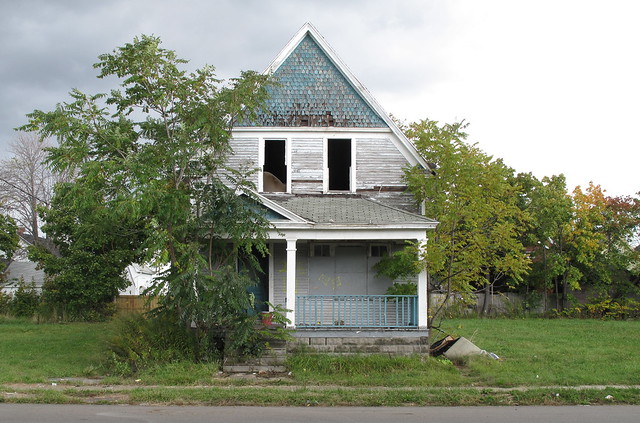
Jeff Simon refers to Buffalo's urban prairie for the first time in today's Buffalo News.
IMG_9538
From Jeff Simon:
“The Urban Prairie.” It’s a phrase I’d never heard before. A friend told me that it came from an urbanist she knows as we drove through Buffalo’s East Side on the way back from dinner. I was looking for vestiges of well-remembered landmarks…or at least their sites. So many were gone, replaced by huge, empty, snow-covered plains between buildings that really DID look like some sort of urban prairies. read the rest...
One of the most amazing reads about what has vanished on the City's East Side was written by New York Times writer Verlyn Klinkenborg - The Last Fine Time (1990). Here's that post from 2007 along with a map from back in the day and a current pic of what remains on Buffalo's ever increasingly larger urban prairie. The book's setting, Sycamore Street.
__________________________________________________________________________
building indexfixBuffalo flickrcreative classshrinking citiesamericansuburbX
spacing torontoinfrastructuristinhabitat

2/27/2010

Two to Save

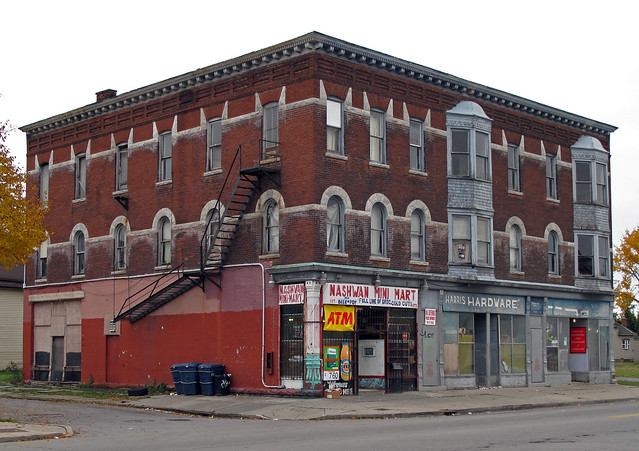
On Friday afternoon the Preservation League of New York State placed two significant East Side properties on the Seven to Save list of endangered places - 169 East Ferry and the Willert/AD Price Courts. Here's the League's press release.


169 East Ferry - Buffalo, NY
169 East Ferry - additional views

169 East Ferry is home to Harris Hardware, Buffalo's oldest black hardware store. Located one block from the recently renovated Performing Arts High School this magnificent building is locally owned by Glenn Banks (see above pic stream). The structure is an important landmark along a street that has seen dozens of mixed-use commercial buildings demolished over the years. It's directly across from this abandoned City-owned building.

IMG_3104
Willert/AD Price Courts - additional views

The Willert/AD Price Courts were placed on the local radar a year ago via a series of Buffalo Rising posts - here and here - about the threatened sculptural elements at the Courts. These sculptures adorn a uniquely Modernist complex that is home to the first housing project in New York State designed exclusively for African American families.

Western New York Heritage magazine carried this article last Spring about the artists - Robert Cronbach and Harold Ambellan - and the significance of their work. Two of the most compelling Cronbach pieces, flanking the main entrance doors - here - depict an escaped and returning slave.

Buffalo News reporter Mark Sommer wrote this article about yesterday's announcement by the Preservation League.
__________________________________________________________________________
building indexfixBuffalo flickrcreative classshrinking citiesamericansuburbX
spacing torontoinfrastructuristinhabitat

2/23/2010

Fixing the Kensington

The City's Bicycle-Pedestrian Advisory Board has issued the following statement (.pdf) regarding the Kensington feasibility study that's about to be funded.


New York State Senator Antoine Thompson is driving the study and the emerging conversation currently does not include a third option. The two options being studied involve capping the Kensington. The first includes a raised cap and the second involves blasting through 4' of rock, lowering the expressway and installing a cap at grade. Both options involve capping an approximately one mile stretch of the Kensington from East Ferry to Best Street.

There's a third option, the boulevard option. From the Bicycle-Pedestrian Advisory Board:
NYS DOT should consider a 3rd (Boulevard) option within the feasibility study to determine what the benefits or consequences of an at-grade, eight lane blvd. would provide for the surrounding community and its associated costs compared to the other options. (see attached information on the Boulevard Option provided by the New Millennium Group)
Here's the podcast from the January 4th meeting where a representative from the New York State Dept of Transportation presented the first two options currently being studied. The New Millennium Group has provided an information sheet about the boulevard option.

There's a precedent for removing highways. Here's a lesson from San Francisco.

__________________________________________________________________________

2/18/2010

The Plundering of Buffalo...

The latest issue of Artvoice has this piece - Continental Drift: Is the Church Going South on Buffalo? - by Bruce Fisher. This is about the future of St. Gerard's and some of the broader cultural issues in play surrounding the plundering of Buffalo, NY.

IMG_5132

Bruce writes:
Is there a compelling public interest in preserving the artifacts and sacred sites of an ancient civilization? 
The United Nations answers that question with an emphatic yes. So does the United States when it comes to national treasures. And even if we don’t have a Japanese-style “irreplaceable cultural masters” program to support living folk artists, we do have aggressive enforcement of the National Historic Preservation Act and five or six laws focused on Native American religious issues, especially graves and sacred sites. The United Nations designates and supports world heritage sites, a majority of which are religious—cathedrals, monasteries, temples, even whole communities shaped by old beliefs. 
So it would seem that official respect for religious expression, especially in visual and plastic arts and architecture, is pretty well established policy. Tourists aren’t allowed to take a chunk of the Parthenon home with them anymore, unlike Lord Elgin...read the rest.
Here's the additional background, with extensive commentary, from a USA Today article regarding the plan to demolish, move and rebuild St. Gerard's near Atlanta, GA. Two months ago Preservation Buffalo Niagara placed their imprimatur on the plan with this statement about the move to Georgia.

Consider joining the Campaign for Greater Buffalo and support the landmarking of the City's architectural treasures, before they disappear.
__________________________________________________________________________
building indexfixBuffalo flickrcreative classshrinking citiesamericansuburbX
spacing torontoinfrastructuristinhabitat

2/17/2010

RIT Design - Broadway Market

Design students from the Rochester Institute of Technology presented their recent work, a new singular vision for the Broadway Market, this afternoon.
IMG_6107
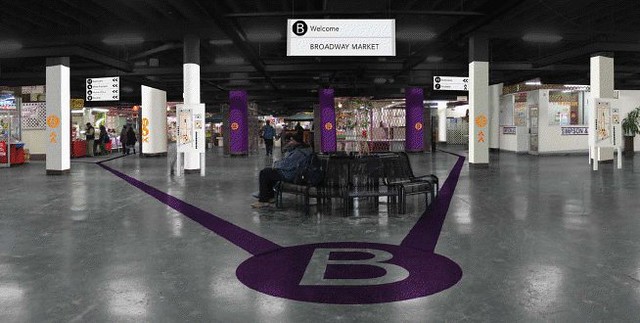
Working with Professor Alex Bitterman, 11 graphic and industrial design students captured the imagination of those attending with a set of refreshing interior and exterior proposals. Council President and Broadway Market neighbor David Franzcyk and Broadway Market Director Tom Kerr attended this afternoon's event.
IMG_6117
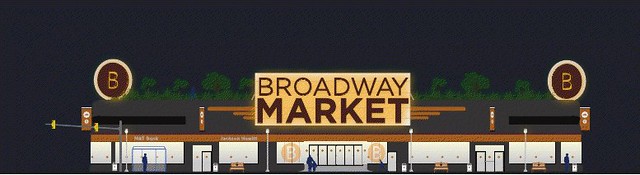
Here's the new look by day and night.
Picture 10
Picture 8
The implementation of this new vision for an East Side landmark could be phased in over a number of years. Kudos to Professor Bitterman and his students for showing the way.
Picture 9
The full text and pics of the RIT/Broadway Market design initiative is available here (.pdf).

update - 9:40pm - check out Alex Bitterman's site! Brian Meyer covered the story for the Buffalo News - here.
__________________________________________________________________________
building indexfixBuffalo flickrcreative classshrinking citiesamericansuburbX
spacing torontoinfrastructuristinhabitat

2/10/2010

Kaleida/UB - February 2010

http://farm4.static.flickr.com/3494/3987760808_94aa127d32_o.jpg
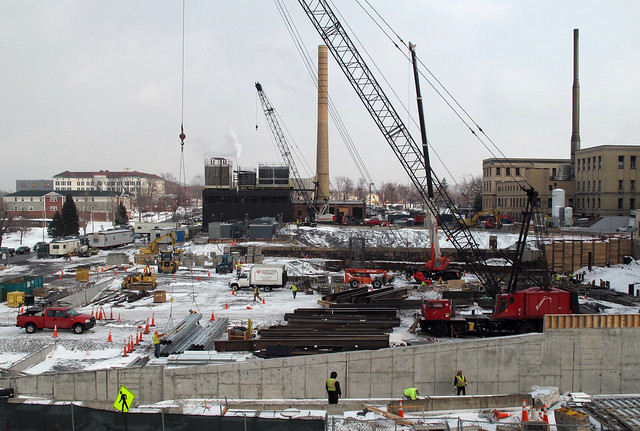
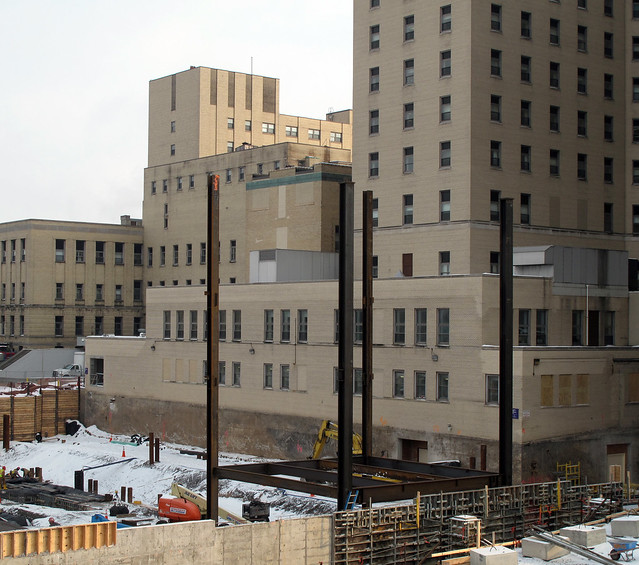
One of the largest construction projects ever undertaken in the City is well underway. This $500m project is the latest edition to the City's medical campus and and frames the southern portion of this neighborhood here at the corner of Ellicott and Goodrich. To the north is Canisius College and the City's largest preservation district - the Hamlin Park Preservation District.
IMG_5099
Late last week the building's structural steel frame was beginning to take shape.
IMG_5100
Just around the corner and sandwiched between the Medical Corridor and Canisius/Hamlin Park are two of the City's most significant development opportunities. Lourdes church on Main Street and St. Vincent's Asylum are both located steps away from the area's unprecedented investment. While 'demolition by neglect' may be the only current plan, the future of both spaces remains uncertain.
See the Kaleida Archive for additional information, pics and posts.
__________________________________________________________________________
building indexfixBuffalo flickrcreative classshrinking citiesamericansuburbX
spacing torontoinfrastructuristinhabitat

2/09/2010

Landfilling the City's Heritage - 1982

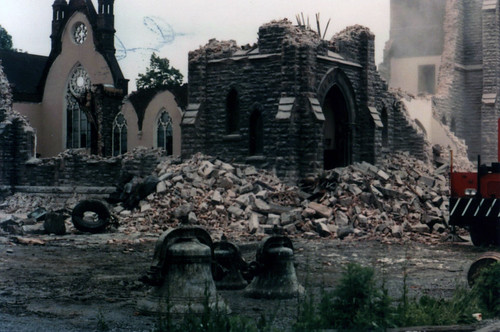
The wrecking ball arrived at St. Patrick's in 1982. Chris Hawley has the story at the Hydraulics Press with some stunning pics. Chris writes:

The erasure of the ecclesiastical monument, built in 1891 as the permanent house of worship for the parish founded at the site in 1853, was an act of vandalism against the public memory of the Hydraulics as Buffalo's first Irish neighborhood - later, a largely German and Polish neighborhood.

http://farm5.static.flickr.com/4041/4334307598_2a73590035.jpg

St. Patrick's Demolition

The memory of weddings, funerals, baptisms, many of the principal defining moments of the lives of the neighborhood's Catholic residents, disappeared as quickly as the rubble of the church's Medina sandstone walls could be carried away to the landfill.
Chris has additional St. Patrick's demolition pics in his flickr stream - St. Patrick's demolition slide show. Buffalo Rising posted this yesterday about the St. Patrick's demolition.
__________________________________________________________________________
building indexfixBuffalo flickrcreative classshrinking citiesamericansuburbX
spacing torontoinfrastructuristinhabitat

2/05/2010

Wonder where it all goes...?

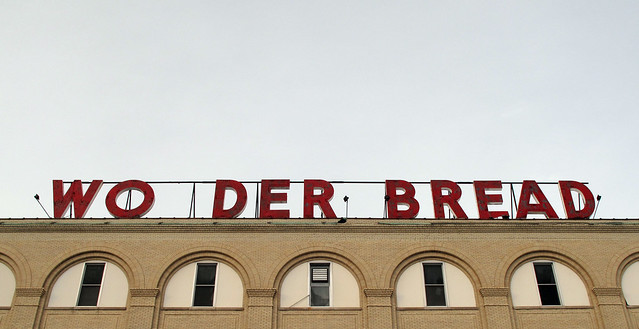
This is an amazing building. Wonder Bread is an early 20th century, steel-reinforced concrete "daylight factory."

IMG_5111

The building's interior spaces are characterized by tall ceilings, large south-facing windows, and open layout to maximize the penetration of natural light. The exterior, faced in blond brick, does not reference its structural framing in concrete and is an ode to preceding 19th century load-bearing, timber-framed mill buildings. The windows at top are references to the Roman arch, a common feature of British and American mill buildings in the late 19th century.

Pyramid Brokerage lists the Wonder Bread building - 313 Fougeron - for $800k. In other markets such a spectacular spot would be snapped up in New York minute. Two years ago Buffalo Rising took a close look at a business located at Wonder Bread. Here's that story with a few interior pics.

This blog's focus has centered on a number of unique City-owned residential structures in the past few years - the Woodlawn Row Houses, 2 Girard, 16 Harwood Place and 194 East Utica. In additon, a number of religious buildings have been placed on the local radar, these include: the German Roman Catholic Orphan Home, St. Matthew's, Transfiguration and Sacred Heart. Occasionally I've posted about some of the East Side's threatened industrial treasures.

The Wollenberg Grain Elevator was City-owned and had recently been listed on the National Register. It was demolished by neglect and burned during the night in October 2006. This year, in addition to the new City Abandoned series, a number of threatened industrial buildings on the City's East Side will be profiled.

Meanwhile curious minds would like to know what happened to the missing 'N' - it was dangling by a thread last Friday. By Monday it was missing.
__________________________________________________________________________

2/04/2010

St. Gerard's in USA Today

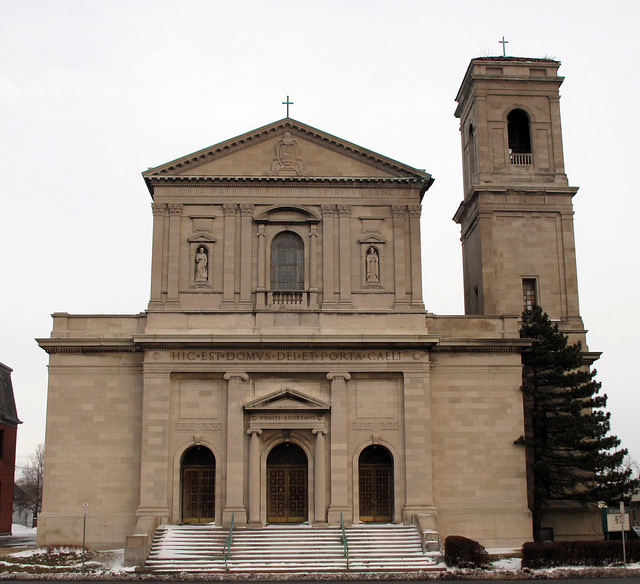
Today, Buffalo's East Side and St. Gerard's Church are in the national spot light. Here's the USA Today story - NY Church's Move to Georgia: 'Preservation by Relocation'?
Some, such as Preservation Buffalo Niagara, accept the move as a necessary evil; others oppose it as what Tim Tielman, director of the Campaign for Buffalo History, Architecture and Culture, calls "a demolition and salvage operation. They want to harvest our architectural heritage and put it in a box."
David Franczyk, president of the Buffalo city council, has a message for the Georgia parish: "Build your own church. We have enough vacant lots."
Two weeks ago a post about St Gerard's - Moving St. Gerard's South - introduced the suburban Atlanta parish's new website. You'll be able to observe their plans for dismantling, moving and reassembling of one of Buffalo's architectural and heritage assets.

IMG_5130
St. Gerard's
From USA Today:
Some preservationist groups view the move as justifiable for lack of an alternative — "an odd-duck exception," says Henry McCartney, director of Preservation Buffalo Niagara.
Others vow to fight. Tielman of the Campaign for Buffalo History says he'll try to have St. Gerard's designated a landmark by the Buffalo Preservation Board (the city's landmarks commission) to delay or block its removal. Among his arguments: The move would leave the neighborhood without its greatest landmark and the city without one of its architectural gems.
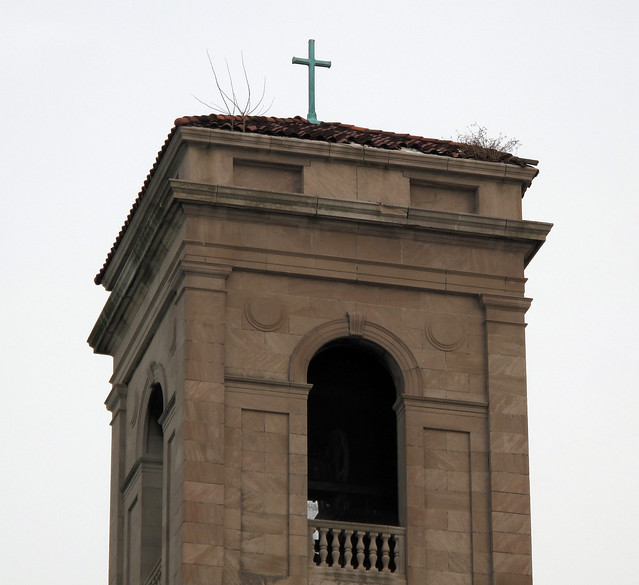
A tree sprouts from the roof of St. Gerard's bell tower. Inside the church, paint is peeling and plaster is falling. The roof leaks; before the church closed, several sections had to be roped off when it rained. read the rest...
IMG_5127
St. Gerard's

With limited resources, what's a City and civic minded community to do? Two years ago the City's three leading preservation organizations - including the Campaign for Buffalo (Tim Tielman's organization) - commissioned a study about the state of preservation in the City. Here's that story from a post about another threatened heritage property and landmark, 16 Harwood Place.

Consider joining the Campaign for Buffalo and support the landmarking of the City's architectural treasures, before they disappear.

Update - 2/5/10 Buffalo News reporter Jay Tokasz has the following story about St. Gerard's in today's B/N.
Update - 2/6/10 Buffalo Rising has the following story about St. Gerard's.
__________________________________________________________________________
building indexfixBuffalo flickrcreative classshrinking citiesamericansuburbX
spacing torontoinfrastructuristinhabitat

1/31/2010

City Abanonded: 16 Harwood Place - Lyth Cottage

This is the first part of a new monthly series focusing on heritage properties that the City of Buffalo owns and has abandoned. Every month a new property will be featured, hard questions will be asked and regular monthly updates will present an on-going status report.

16 Harwood Place is cool. There are only two residential structures in the Hamlin Park Historic District that incorporate structural and ornamental materials that were manufactured by the J. Lyth & Sons Tile Company, with production facilities located across the street - here. The first is the Lyth family home - and the second is this lovely brick and terra-cotta cottage which stands directly behind the family's house.

16 Harwood Place - Lyth Cottage

The City acquired Lyth Cottage in 1997. This map shows its proximity to Mayor Brown's residence and Canisius College, a few blocks away.

16 Harwood Place - Lyth Cottage

In late 2007 the City's three major preservation organizations, in conjunction with the National Trust for Historic Preservation, commissioned a study - Buffalo Historic Preservation Issues and Opportunities Assessment (.pdf) - by Elizabeth Waters. The ten page document was widely circulated and read in the local preservation community when it was released two years ago. Her findings are presented along four lines: strengths, weaknesses, challenges and opportunities. The following passage was identified as a major challenge in Buffalo:
An embarrassment of riches. Like a number of other historic cities in the northeast and mid-west that have lost substantial population, Buffalo has a very large stock of historic resources relative to its population. The number of historic structures exceeds the number the population and economy will be able to rehabilitate and reuse in the foreseeable future. This places great pressure on the preservation community and the city to determine what it is most important to preserve and how to do it.
In the context of some staggering recent losses - the City-owned Wollenberg Grain Elevator (2006) and the Woodlawn Row Houses (2009) - and in light of the fact that the National Trust's annual conference will be held in Buffalo next year - the obvious question is: where's the plan? While emerging community-wide support for the landmarking of the Statler Hotel is developing (and should) what is currently being done to protect the heritage properties that have already been designated as landmarks? If the City's major preservation organizations agree with Elizabeth Waters and the findings presented in her February 2008 report, certainly Lyth Cottage deserves additional attention and protection.

16 Harwood Place - Lyth Cottage 16 Harwood Place - Lyth Cottage 16 Harwood Place - Lyth Cottage 16 Harwood Place - Lyth Cottage 16 Harwood Place - Lyth Cottage
click image to enlarge

Preservationists should be demanding that the City showcase this property. At a minimum, the online catalog of City-owned property available for sale should include Lyth Cottage. It doesn't. Why? Architecturally and historically Lyth Cottage is the most unique residential structure the City of Buffalo owns. With the exception of its local landmark status it is physically unprotected and as of yesterday, it remains unsecured.

16 Harwood Place - Lyth Cottage

Over the past few years Lyth Cottage has been shown to a number of qualified prospective buyers. Estimates begin at $50-75K to stabilize the shell - new roof, windows, doors, etc... - another $15-20K for new electrical and plumbing with a range of interior finishes waiting for you and your check book. Preservation standards aren't as restrictive as you might expect and allow for significant design flexibility if you can imagine a more modern addition to this place. If you're looking for a renovation project that intersects with the City's industrial and residential heritage, Lyth Cottage might be your place.

New locks have been installed on the back door, if you're interested in taking a closer look, please get in touch.

See the Lyth Cottage archive for more additional posts and pics.
__________________________________________________________________________
building indexfixBuffalo flickrcreative classshrinking citiesamericansuburbX
spacing torontoinfrastructuristinhabitat

1/30/2010

The Engel House - What Remains?

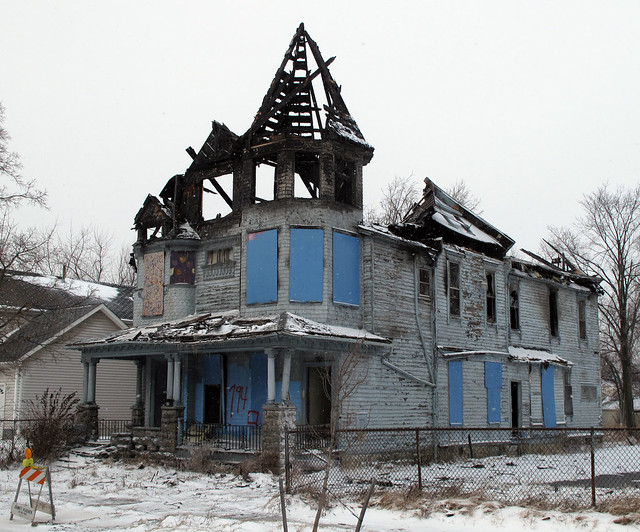
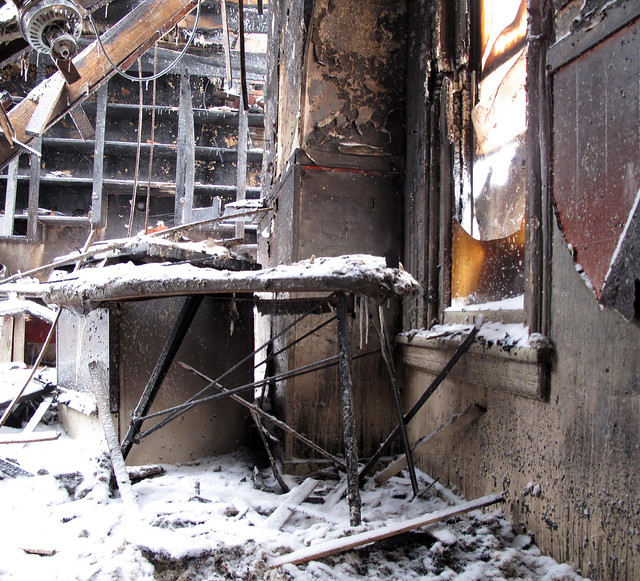
An emergency demolition order was issued less than 48 hours after an early morning blaze devastated the Engel House - 194 East Utica.
The Engel House - 194 East Utica
What remains - the Engel House
According to the Department of Inspections City residents spent $21.8K to demolish the structure. This included $3k for asbestos removal (20 sqft of floor tile and 75' of pipe insulation). The remains will be sent to a landfill next week.
See the Queen City Farm archive for additional information and a few interior (2/2007) and exterior (4/2006) pics - here.
__________________________________________________________________________

building indexfixBuffalo flickrcreative classshrinking citiesamericansuburbX
spacing torontoinfrastructuristinhabitat

1/27/2010

The Engel House - Burned

Some fixBuffalo readers may remember this post - Saying Goodbye? - and a series of posts from 2006 which helped place 194 East Utica on the local radar. These posts caught the attention of Rod and Meagan McCallum. They bought and rehabbed a City-owned house on Glenwood, directly behind 194 East Utica. Meagan's parents moved 1000 miles and bought and rehabbed a house around the corner to be closer to their grandchildren. Her parents knew what others in the neighborhood began to understand. Rod's plan, transforming a series of vacant lots and houses in a neighborhood that most people had written off, was as real and practical as it was visionary. Deciding to live and and farm a place that is so off the radar - a place that so many people have abandoned and fled - requires the existential patience of Job.
The Engel House - 194 East Utica
exterior view - 194 East Utica - The Engel House
After numerous fundraisers and work days the center piece of this initiative is now gone. An arsonist set 194 East Utica on fire early this morning. In a widely circulated email this morning Rod pointed to the changed funding climate that's held up rehab plans on this part of the Queen City Farm project.
The Engel House - 194 East Utica
interior view - 194 East Utica - The Engel House
In a New York Times article - Vacant Properties: Scourge of a Beaten Down Buffalo, September 2007 - I suggested a new system of triage, a way of prioritizing the architecturally and historically significant structures, as everything can not be saved. This would be a first step and certainly help mitigate what's clearly a pattern of loss moving forward. After the identification of cool City-owned property is completed, mothballing is the second.

The alternative - current plan?! - remains ad hoc at best and consists of expensive emergency demolitions. Planning and strategic thinking about these places by preservation organizations and City Hall is non-strategic, ad hoc and sadly reactionary. According to City Hall, late this morning, an emergency demolition order has not been signed. It will be ordered in the next few days as this fire ravaged hulk sits directly across the street from the temporary home of City Honors High School. The demolition of 194 East Utica, planned by the City in 2006, would have cost $22k. Emergency demolitions always cost more.

The more sensible alternative, systematic and strategic identification and mothballing, could easily take advantage of these systems - Vacant Property Security - that may prevent the arsonist from entering the structure. A plan that requires everyone pushing and pulling in the same direction would preserve these sensitive structures for future use. Some very cool City-owned places such as the Woodlawn Row Houses and the Wollenberg Grain Elevator once burned are gone forever.

See - Queen City Farm video and the QCF archive for additional pics and posts.
__________________________________________________________________________
building indexfixBuffalo flickrcreative classshrinking citiesamericansuburbX
spacing torontoinfrastructuristinhabitat

1/21/2010

Learning from Youngstown - Part III

Speaking of Youngstown - Mayor Jay Williams was in Buffalo, NY for the Great Lakes Building ReUse conference in 2008. Buffalo ReUse sponsored the event and the Mayor's talk is now available for the first time, today - courtesy of Kerry Brogan at Paget Films.

Here's the first of six parts.

The remaining five parts of the Mayor's talk are available after this link. See Learning from Youngstown - Parts I & II.
__________________________________________________________________________
building indexfixBuffalo flickrcreative classshrinking citiesamericansuburbX
spacing torontoinfrastructuristinhabitat