Buffalo News reporter Mark Sommer wrote this article about yesterday's announcement by the Preservation League.
building index • fixBuffalo flickr • creative class • shrinking cities • americansuburbX
spacing toronto • infrastructurist • inhabitat
NYS DOT should consider a 3rd (Boulevard) option within the feasibility study to determine what the benefits or consequences of an at-grade, eight lane blvd. would provide for the surrounding community and its associated costs compared to the other options. (see attached information on the Boulevard Option provided by the New Millennium Group)
Is there a compelling public interest in preserving the artifacts and sacred sites of an ancient civilization?
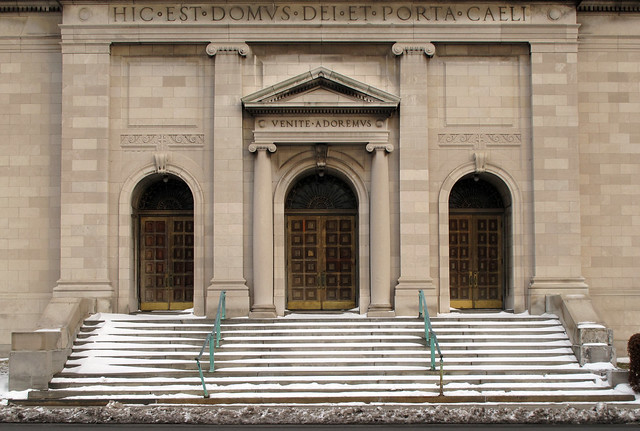
The United Nations answers that question with an emphatic yes. So does the United States when it comes to national treasures. And even if we don’t have a Japanese-style “irreplaceable cultural masters” program to support living folk artists, we do have aggressive enforcement of the National Historic Preservation Act and five or six laws focused on Native American religious issues, especially graves and sacred sites. The United Nations designates and supports world heritage sites, a majority of which are religious—cathedrals, monasteries, temples, even whole communities shaped by old beliefs.
So it would seem that official respect for religious expression, especially in visual and plastic arts and architecture, is pretty well established policy. Tourists aren’t allowed to take a chunk of the Parthenon home with them anymore, unlike Lord Elgin...read the rest.

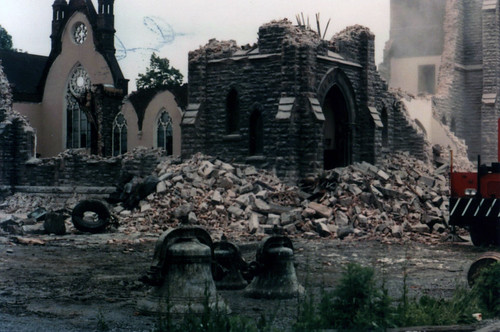
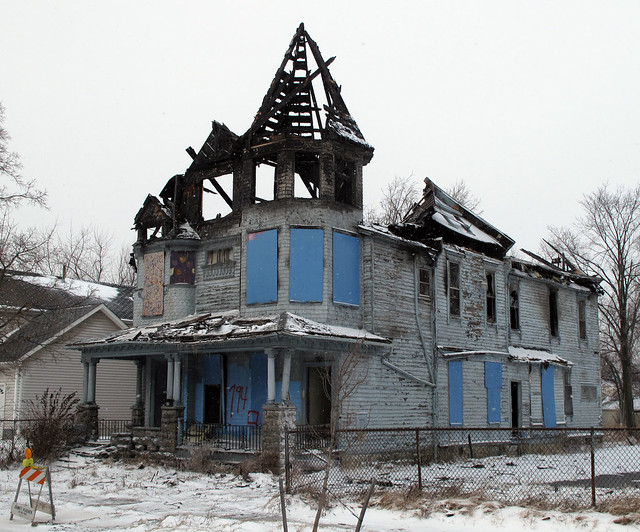
The erasure of the ecclesiastical monument, built in 1891 as the permanent house of worship for the parish founded at the site in 1853, was an act of vandalism against the public memory of the Hydraulics as Buffalo's first Irish neighborhood - later, a largely German and Polish neighborhood.

St. Patrick's Demolition
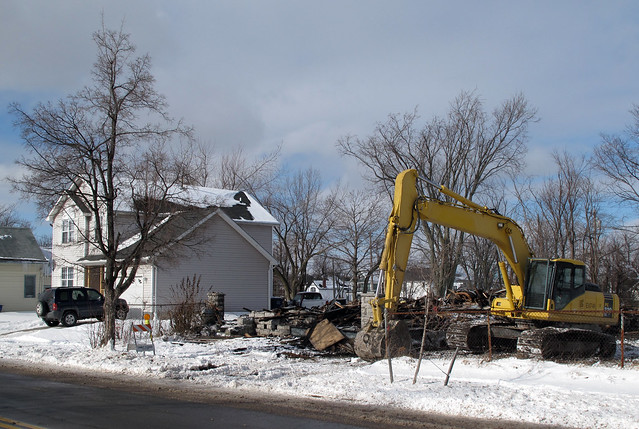
The memory of weddings, funerals, baptisms, many of the principal defining moments of the lives of the neighborhood's Catholic residents, disappeared as quickly as the rubble of the church's Medina sandstone walls could be carried away to the landfill.
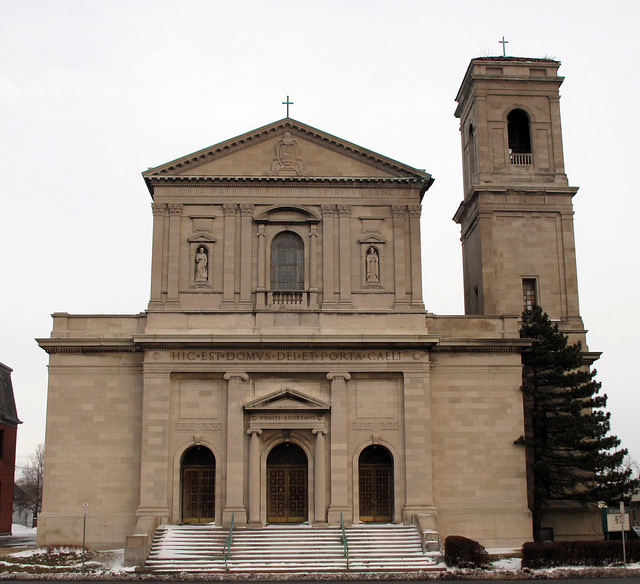
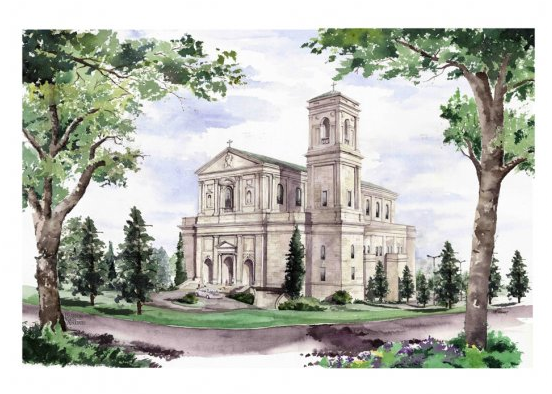
Some, such as Preservation Buffalo Niagara, accept the move as a necessary evil; others oppose it as what Tim Tielman, director of the Campaign for Buffalo History, Architecture and Culture, calls "a demolition and salvage operation. They want to harvest our architectural heritage and put it in a box."David Franczyk, president of the Buffalo city council, has a message for the Georgia parish: "Build your own church. We have enough vacant lots."
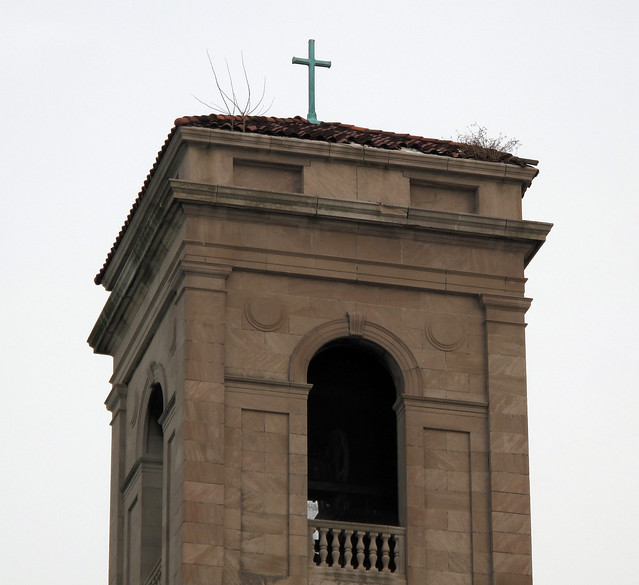
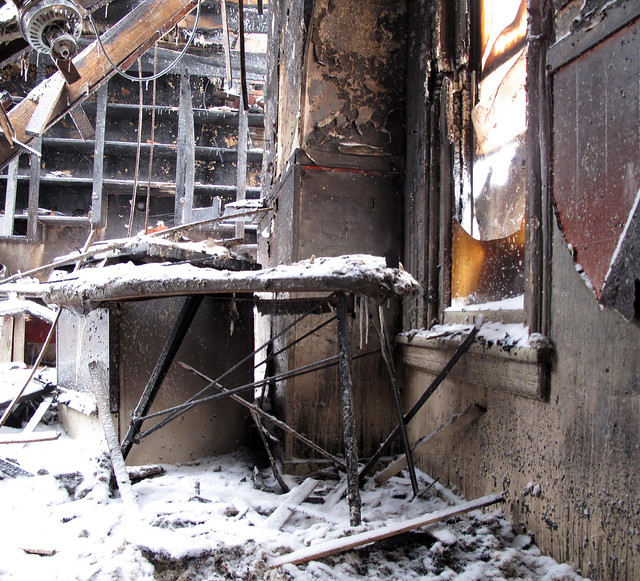
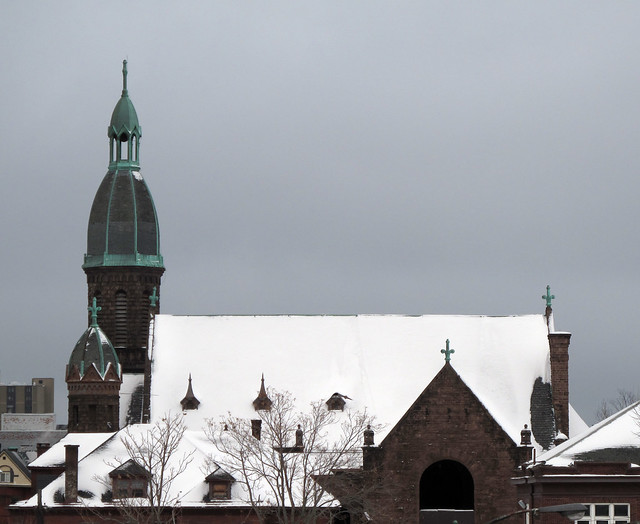
Some preservationist groups view the move as justifiable for lack of an alternative — "an odd-duck exception," says Henry McCartney, director of Preservation Buffalo Niagara.Others vow to fight. Tielman of the Campaign for Buffalo History says he'll try to have St. Gerard's designated a landmark by the Buffalo Preservation Board (the city's landmarks commission) to delay or block its removal. Among his arguments: The move would leave the neighborhood without its greatest landmark and the city without one of its architectural gems.A tree sprouts from the roof of St. Gerard's bell tower. Inside the church, paint is peeling and plaster is falling. The roof leaks; before the church closed, several sections had to be roped off when it rained. read the rest...
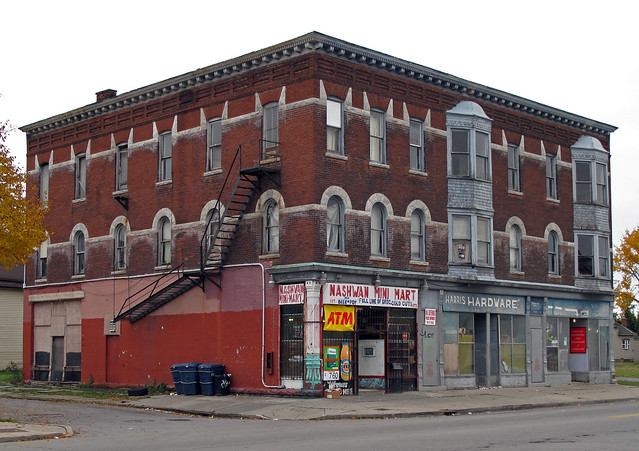
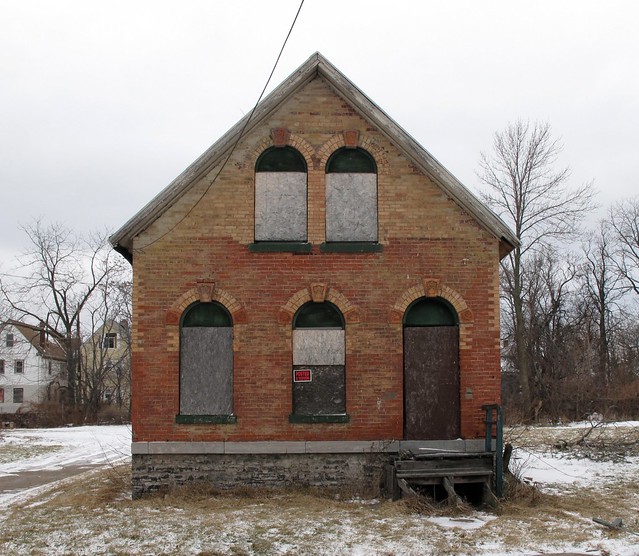
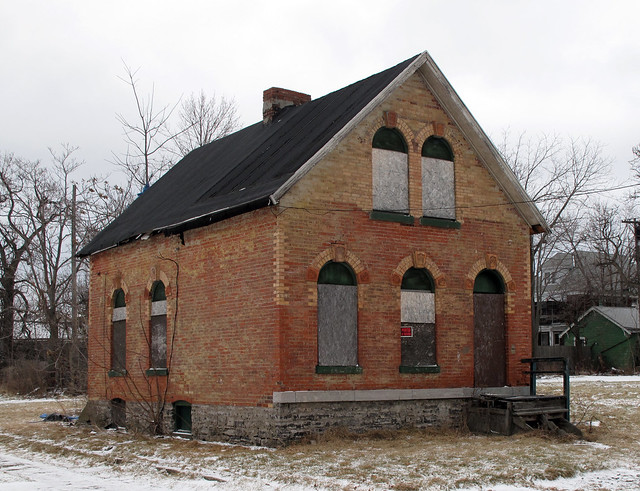
An embarrassment of riches. Like a number of other historic cities in the northeast and mid-west that have lost substantial population, Buffalo has a very large stock of historic resources relative to its population. The number of historic structures exceeds the number the population and economy will be able to rehabilitate and reuse in the foreseeable future. This places great pressure on the preservation community and the city to determine what it is most important to preserve and how to do it.
The Youngstown Solution
Masten Councilman Demone Smith looks at a radical solution: unbuilding the city, landbanking neighborhoods
Last week, Masten District Councilman submitted into the legislative record two articles about Youngstown, Ohio’s efforts to manage its shrinking population. Buffalo, Smith told his fellow councilmembers, could learn from Youngstown’s example.
Youngstown, like Buffalo, has lost more than half its population since World War II, dwindling from a peak of 170,000 to just 80,000. The city’s leadership has decided to accept the likelihood of further population loss and entered into a partnership with academics at Youngstown State University to explore methods of managing the decline. The resulting plan, called Youngstown 2010, includes a radical concession to the realities faced by economically depressed cities in the Northeast with populations that are growing older and poorer: Some neighborhoods, the plan says, are (at least temporarily) beyond salvaging. So governments should stop investing in infrastructure in those neighborhoods and encourage residents to move into more viable sections of the city. The decrepit neighborhoods should be landbanked, the study says—cleared and turned into greenspace until the city’s population and tax base rebound.
Way back in 2002, renowned urban planner Anton Nelessen offered the same advice to Buffalo. In an interview with Artvoice, Nelessen said, “Buffalo needs to shrink. The whole urban ecostructure needs to shrink. Where do you choose what shrinks and what doesn’t shrink? What do you keep and what do you dispose of? That becomes significant not only to localized planning but to regional planning.”
Nelessen dismissed as sentimental and inhumane the notion that people living in distressed neighborhoods on Buffalo’s East Side might be angry at a government that planned those neighborhoods into obsolescence. “There is no neighborhood anymore,” he said. “It’s ragged teeth of buildings here and there, lots of people on drugs, little kids barely surviving on the streets. If that’s what we want as a country and a culture, that’s fine. But if it’s not what we want, then something needs to be done. It’s time we stopped pussy-footing around and said, ‘We’ve got to begin to talk about planning policies.’ Sprawl has devastated most cities, and the Buffalo area, because it is both losing population and has lots of housing being built on the periphery, is in an advanced state of sprawl.”
Demone Smith represents some of the poorest and most neglected areas of the city. If he seriously is putting this idea on the table—the idea that Buffalo ought to let some of those neighborhoods fade away rather than continue to invest in them—then maybe we ought to pick it up and examine it.