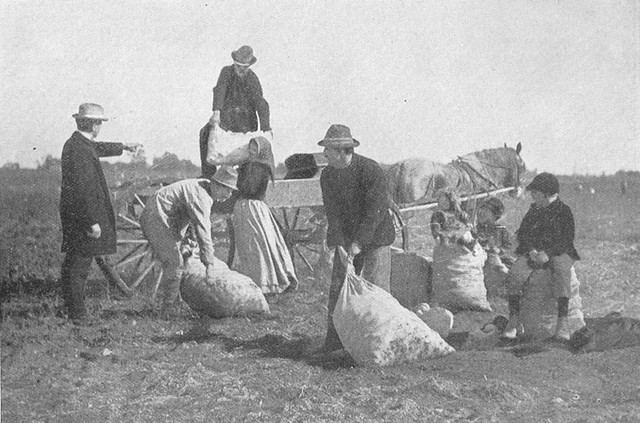
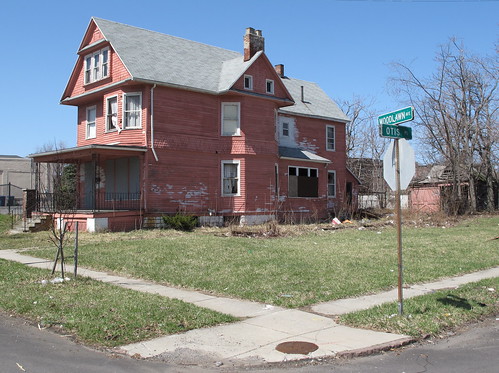
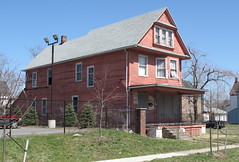
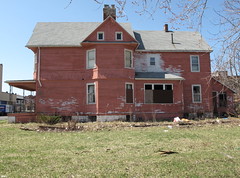
In 1895, Mayor Edgar Boardman Jewett, newly elected mayor of Buffalo, proposed that Buffalo follow the example Detroit which had utilized vacant land in the city for use by poor people as farms. The city would solicit the loan of such land from landowners, prepare the fields by having them plowed, and provide the seeds.
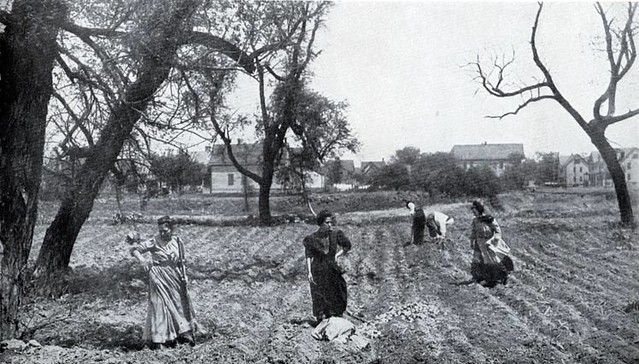
Pingree expanded the public welfare programs, initiated public works for the unemployed, built new schools, parks, and public baths. He gained national recognition through his "potato patch plan," a systematic use of vacant city land for gardens which would produce food for the city's poor.
Creative Class • Shrinking Cities • Saturdays in the Neighborhood
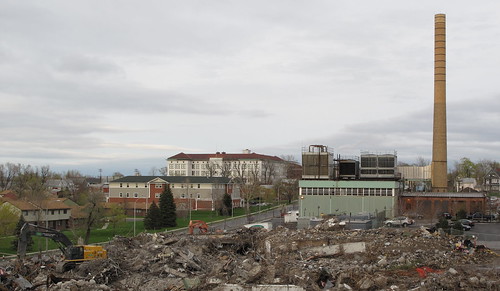
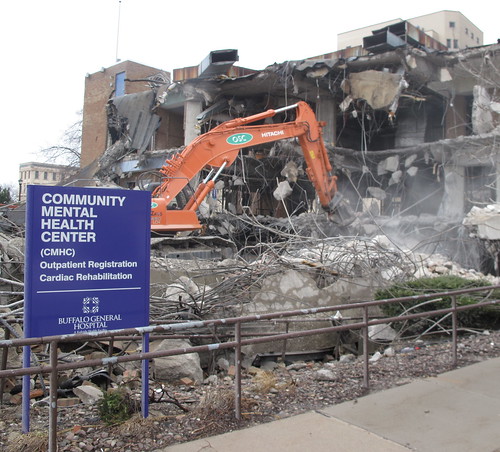
The demolition is still taking place here along Goodrich Street in preparation for the Kaleida/UB project I posted about a few weeks ago - Medical Campus Meets Midtown.
Investment in the immediate neighborhood is accelerating. In the pic, City Honors is center left, where a $40m renovation is underway. The new brick and two tone vinyl building nearby fronts on Michigan Avenue. I first posted pics about it three years ago, here.
I'll be adding additional pics to my Kaleida/UB flickr series as this project develops.
See the following posts for additional background information - Kaleida Expands, Again and the Hamlin House Demoltion also on Goodrich Street, from October 2006.
See - Kaleida Archive for additional information.
Artspace • BAVPA • Woodlawn Row Houses • fixBuffalo flickr
Creative Class • Shrinking Cities • Saturdays in the Neighborhood
Artspace • BAVPA • Woodlawn Row Houses • fixBuffalo flickr
Creative Class • Shrinking Cities • Saturdays in the neighborhood
The next step is Common Council approval and a signed lease agreement with the Dept. of Economic Development. Approval for the signed lease agreement has been reportedly signaled by Commissioner Brian Reilly.
Artspace • BAVPA • Woodlawn Row Houses • fixBuffalo flickr
Creative Class • Shrinking Cities • Saturdays in the neighborhood
State land bank going green, offering vacant lots up as community gardens
The State of Michigan Land Bank Fast Track Authority is making its inventory of nearly 7,000 vacant lots statewide -- 6,000 in Detroit alone -- available as community gardens via its Garden for Growth program.
"Our goals, in addition to finding productive uses for these vacant plots, is to support the Governor's Urban Food Initiative," says Carrie Lewand-Monroe, the Michigan Land Bank's executive director. "We're hoping to help allow folks in urban areas to access fresh, healthy food."
The way it works is that any community member can apply to garden a lot in the Michigan Land Bank for $50 for one year. At that point, participants are able to put in an application to purchase the land.
This lease-first approach is considered a "best practice" for programs of this type for two reasons: It allows time for the garden to be established and it keeps it tax-free for the first year. The Land Bank is willing to flexible with lease terms; it is working with The Greening of Detroit on five parcels that will be leased for five years.
Any kind of garden is eligible: native plants, flowers and vegetables -- even a park, says Lewand-Monroe. All gardeners will be connected with the Greening of Detroit's Garden Resource Program for classes and planting material.
Lewand-Monroe explains why 7,000 of the Michigan Land Bank's 8,000 properties are vacant lots: because they are all foreclosed properties that date back to 1999, which was when tax laws changed. "There aren't as many structures as the county would have," she says.
They also administer a Side Lot program for vacant lots that are adjacent to occupied residences. To search for a property, use the Land Bank's web site Search for Property feature. The application for the Garden for Growth program is also available on the site.
Artspace • BAVPA • Woodlawn Row Houses • fixBuffalo flickr
Creative Class • Shrinking Cities • Saturdays in the neighborhood
A Land Bank for Buffalo? - See Today's NYT!
5 Comments Published by fix buffalo on 4/22/2009 at 2:36 PM.Dozens of proposals have been floated over the years to slow this city’s endless decline. Now another idea is gaining support: speed it up. Instead of waiting for houses to become abandoned and then pulling them down, local leaders are talking about demolishing entire blocks and even whole neighborhoods.The population would be condensed into a few viable areas. So would stores and services. A city built to manufacture cars would be returned in large measure to the forest primeval.
“Decline in Flint is like gravity, a fact of life,” said Dan Kildee, the Genesee County treasurer and chief spokesman for the movement to shrink Flint. “We need to control it instead of letting it control us.”
See also - Our Urban Prairie, Summer 2008 and Getting Smarter about Decline.
Artspace • BAVPA • Woodlawn Row Houses • fixBuffalo flickr
Creative Class • Shrinking Cities • Saturdays in the neighborhood
Ground was broken recently. The demolition of the Community Mental Health Center's building on Ellicott Street between Goodrich and North Streets is the first visible sign of a project that's expected to four years to complete.
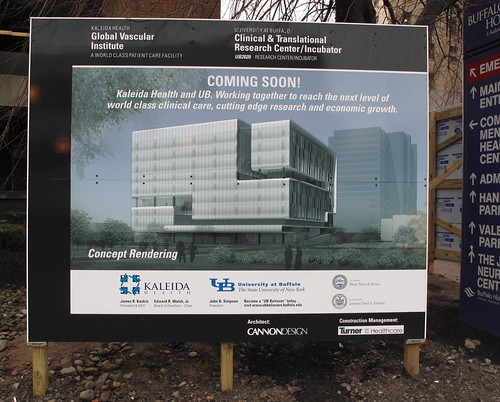
Canon Design is taking the lead on the first of four buildings which are expected to be completed in 2013. This will house Kaleida's Global Vascular Insititute and UB's Clinical Translational Research Center/Incubator.
According to the Draft Generic Environmental Impact Statement (DGEIS) that was released late last year - here (.pdf file after the jump) - three additonal structures will be built in the North End of the Medical Campus. These include - a 200 bed skilled nursing facility (replacing Millard Fillmore Gates), a 10 story Ciminelli Medical Office Building and a 1600 space parking ramp which is the size of the new Blue Cross parking ramp behind City Hall.
In addition to the four new structures which are scheduled to be built by 2013, there are a number of other interesting developments taking place. Goodrich Street will be closed permanently between Ellicott and Michigan Avenue. This will allow, according to the DGEIS, an integration of emergency services between Buffalo General Hospital and the new GVI pictured above. The DGEIS also specifies a number of pedestrian bridges connecting the various new buildings, at least one of these will be 40' wide. The site for the 1600 space parking ramp hasn't been located according to last year's DGEIS. Late last year I posted about a number of demoltions that were - and still are - anticipated according to this plan.
Here's a site map indicating the proximity to additional development on this side of Main Street. City Honors (outlined in red) just to the north of the Medical Campus is undergoing substantial renvovations and will expand its athletic fields by the time it re-opens in September 2010.
See - Kaleida Archive for additional information.
Artspace • BAVPA • Woodlawn Row Houses • fixBuffalo flickr
Creative Class • Shrinking Cities • Saturdays in the neighborhood
This weekend...
- How do you create green space in one of the most industrial states in the U.S.? Tom Woiwode knows. As director of the Greenways Initiative, he's raised more than $125 million to build and maintain trails, orchards and beautiful greenery throughout Southeastern Michigan. He'll tell us how greening a city can help build community and civic engagement.
- And Mary Sue Barrett of the Metropolitan Planning Organization tells us where she'd like to see the stimulus money go, and how spending regionally and not just state-by-state can pay bigger dividends.
Artspace • BAVPA • Woodlawn Row Houses • my flickr
the creativity exchange • latest blog commentss
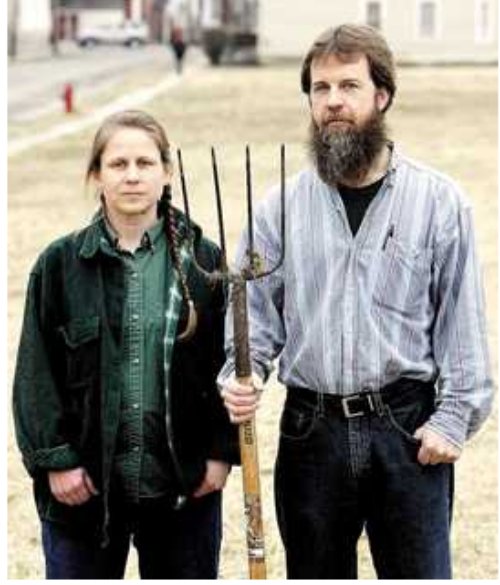
Drive down Fillmore Street between Sycamore and Broadway and you’ll see boarded-up buildings, dilapidated homes, and ubiquitous empty lots. By anyone’s estimation, it’s a rough neighborhood. But walk into 812 Fillmore, and you’ll find dozens of shoes neatly paired in the entranceway, and a warm, welcoming living room filled with children doing their homework, cooking and playing. This is the home of Mark and Janice Stevens, a couple who moved from a farm in Wyoming County to the East Side of Buffalo last year.
Here's the Wilson Street Urban Farm Facebook Group.
Artspace • BAVPA • Woodlawn Row Houses • fixBuffalo flickr
Creative Class • Shrinking Cities • Saturdays in the neighborhood
The administration seems to think economic development means houses. Get a little out of town into rural areas and farming is the economic development base. Farmed well that 2 acres could be a terrific business venture. Now there are some economic advantages attached to farmland that might decrease what the city can take in from taxes but for so many reasons this makes more economic development sense than does housing on that land. Besides a great little farm would probably be such an asset it would raise the real estate value of the surrounding properties. Agriculture remains the number one industry in NYS. We in Erie and Niagara Counties have too many policies restricting farming compared to other counties. Very backwards given food system trends.
Meanwhile, consider joining the Wilson Street Urban Farm Group on Facebook. Read Chris Byrd's posts over at Broadway Fillmore Alive and check out the latest comment stream on Buffalo Rising about this project - Urban Farm vs Housing.
Artspace • BAVPA • Woodlawn Row Houses • fixBuffalo flickr
Creative Class • Shrinking Cities • Saturdays in the neighborhood
Neighborhood Plan Part VI - Sowing the City

3 Comments Published by fix buffalo on 4/07/2009 at 8:09 PM.First, the ultimate fate of the Stevens family's plan to farm a couple of acres of vacant land near the City's historic Broadway Market hasn't been decided. There's a growing comment stream from a Buffalo News blog post - Down on the Farm - that shouldn't be missed. And Artvoice editor Geoff Kelly has taken the lead and turned the City's decision to deny their request into a larger piece about city planning and the wholesale lack of vision that the Brown Administration has regarding innovate landuse planning. His post shouldn't be missed either - Moratorium: No More New Builds.
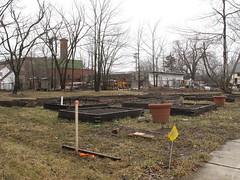
Second, last year Buffalo ReUse established a community garden on two empty lots over on Eaton Street. Here a couple of pics I snapped recently. Make sure to check out the garden's bounty from the Buffalo ReUse flickr stream and slide show of the Eaton Street Community Garden.
While examining the Belmont Shelter's Neighborhood Plan recently - see Part I, Part II, Part III, Part IV and Part V - I noticed that two of Belmont's houses are planned for this little piece of paradise. Buffalo ReUse folks have recently confirmed this. One of the many issues here is that there was zero public input into the site selection process for the Belmont Plan. When there are literally hundreds of empty city owned lots in the their target area. Why these two lots? The garden is contributing on so many levels to the neighborhood and providing food to people in one of Buffalo's poorest neighborhoods. Again - why these two lots?
These issues - involving site selection for new builds - are central to how well Buffalo, a shrinking city, is managing decline. We're actually not doing that well. Public policy has to change. City officials need to address more effective land use policies that reflect the real desires, health and welfare of residents and people, like the Stevens, who want to move here. Is it time for a moratorium on the construction of new builds?
Artspace • BAVPA • Woodlawn Row Houses • fixBuffalo flickr
Creative Class • Shrinking Cities • Saturdays in the neighborhood
Artspace • BAVPA • Woodlawn Row Houses • fixBuffalo flickr
Creative Class • Shrinking Cities • Saturdays in the neighborhood
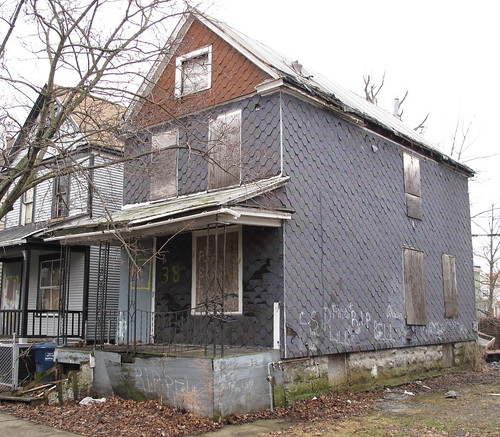
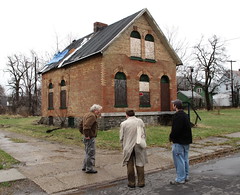
Over the last four years three different groups have stepped forward and have attempted this project. Everyone has tried to retain the current eight unit configuration. Perhaps a new strategy is in order here. Returning the structure to its original form - four units, removing the siding, doing a fun exterior paint job that would clearly indicate four seperate houses and moth balling three units while working on one - might provide the right direction for the 'diy' self-financed plan for the successful rehab of this unique spot. Moving slowly through the project might be the right mix of energy, resources and time to resuscitate the Woodlawn Row Houses.
Artspace • BAVPA • Woodlawn Row Houses • fixBuffalo flickr
Creative Class • Shrinking Cities • Saturdays in the neighborhood
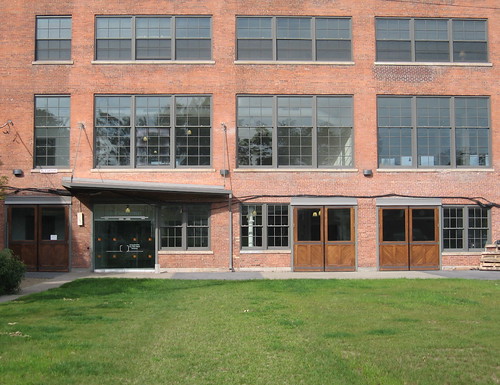
Best-managed cities are creating innovative new solutions to the environmental issues plaguing their communities now. Sustainable Cities Collective is a moderated online community for civic sustainability officials and advocates who are on the frontlines in the struggle to build a sustainable future.
Artspace • BAVPA • Woodlawn Row Houses • fixBuffalo flickr
Creative Class • Shrinking Cities • Saturdays in the neighborhood
Artspace • BAVPA • Woodlawn Row Houses • fixBuffalo flickr
Creative Class • Shrinking Cities • Saturdays in the neighborhood
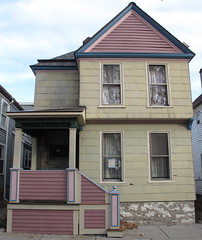
fixBuffalo readers will remember the $35m renovation of the Performing Arts High School just a block east of this location. For less than the cost of latte or a bus token this house is available for the right person; someone who sees the neighborhood's potential and wants to make this house home.
If you're interested in cutting through the homesteading maze and see this as an amazing opportunity and want to move into the neighborhood, let me know.
Artspace • BAVPA • Woodlawn Row Houses • fixBuffalo flickr
Creative Class • Shrinking Cities • Saturdays in the neighborhood
If you've purchased property from the city in the past or are currently involved in such a purchase and care to share some of your experiences, please consider leaving a comment to share with other readers. Thanks.
Artspace • BAVPA • Woodlawn Row Houses • fixBuffalo flickr
Creative Class • Shrinking Cities • Saturdays in the neighborhood
Artspace • BAVPA • Woodlawn Row Houses • fixBuffalo flickr
Creative Class • Shrinking Cities • Saturdays in the neighborhood
After completing an ownership analysis of these stranded properties I learned that Rev. Richard Stenhouse, the former treasurer/secretary of Buffalo's Fiscal Stabiltiy Authority, and his organization, Bethel Community Development Corporation own 38 Ada Place. According to City records it was purchased seven years ago. Neighbors inform me that this single family house hasn't been occupied.
I called the Department of Inspections at City Hall and learned that the last property inspection and Housing Court case was finalized prior to Bethel's purchase, seven years ago.
fixBuffalo readers may remember Rev. Stenhouse's prior Housing Court history involving four houses Bethel owned that were in derelict condition and adjacent to one of Buffalo's most exciting school reconstruction projects - Performing Arts High School. They were eventually demolished pursuant to a settlement with Housing Court, six months after the school reopened. See - Boarding Control and Rev. Stenhouse Steps Down.
A number of calls to Bethel inquiring about the plans for 38 Ada Place haven't been returned. While recent successes on Coe Place demonstrate that a market exists for the renovation of smaller single family houses in Buffalo, 'demolition by neglect' seems to be in order for 38 Ada Place.
Artspace • BAVPA • Woodlawn Row Houses • fixBuffalo flickr
Creative Class • Shrinking Cities • Saturdays in the neighborhood
There are a number of very exciting renovations and new developments happening in the neighborhood and periodically we'll be joined by a growing number of people who are moving into the neighborhood and making some unique houses - that would have been demolished and trucked off to a landfill - their home.
Here's the link to recent Saturday walks around the neighborhood and a flickr series from last Fall's walks. Consider joining me on Saturday mornings at 10am and to learn more about this emerging neighborhood. The walk lasts about an hour - rain or shine!
If you're interested in additional information check out two sections of my 'building & issues Index' - Coe Place and Artspace. This cultural assets map may help further orient you to the neighborhood.
See you on Saturday!
Artspace • BAVPA • Woodlawn Row Houses • fixBuffalo flickr
Creative Class • Shrinking Cities • Saturdays in the neighborhood
This weekend:
- Technology has given birth to a new place, according to Dalton Conley, author of the new book Elsewhere, U.S.A.: How We Got from the Company Man, Family Dinners, and the Affluent Society to the Home Office, BlackBerry Moms, and Economic Anxiety
. In it, he describes the way the American social landscape has changed from the 1950's ideal of a split between work and home, to a constantly connected 24-hour economy. He'll tell us what it means to combine work with leisure, and investment with consumption.
- And we'll speak with John Norquist of the Congress for the New Urbanism. He'll tell us about trends that are shaping urban development world wide and how the way our streets are laid out affects our daily lives.
Artspace • BAVPA • Woodlawn Row Houses • my flickr
the creativity exchange • latest blog commentss
Artspace • BAVPA • Woodlawn Row Houses • fixBuffalo flickr
Creative Class • Shrinking Cities • Saturdays in the neighborhood